
[ OUR VESSELS ]
A proven ferry platform
Switch Maritime has a ferry model in service and three currently in development.
Each vessel is built on the same foundation — hydrogen fuel cell-electric propulsion – and designed to perform like diesel to integrate seamlessly into existing operations.
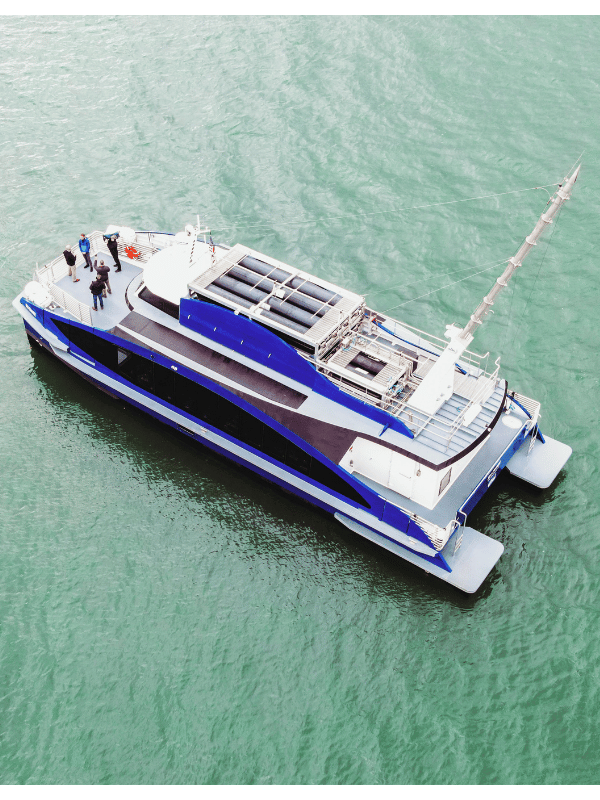
How our ferries work
Featuring hydrogen fuel cell technology
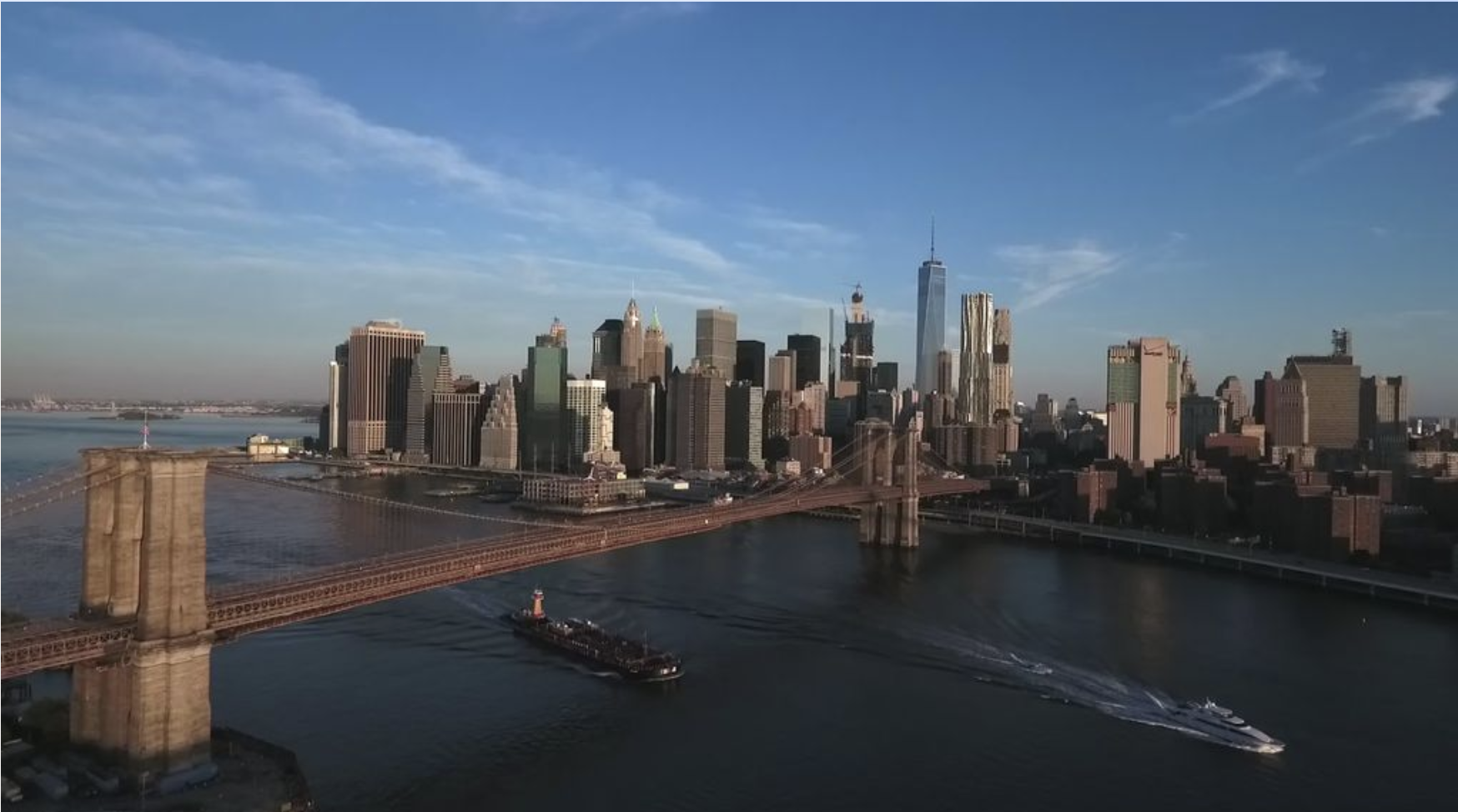
Switch Maritime vessels are all powered by hydrogen fuel cell-electric systems — the same core technology as the Sea Change, scaled and optimized for each platform.
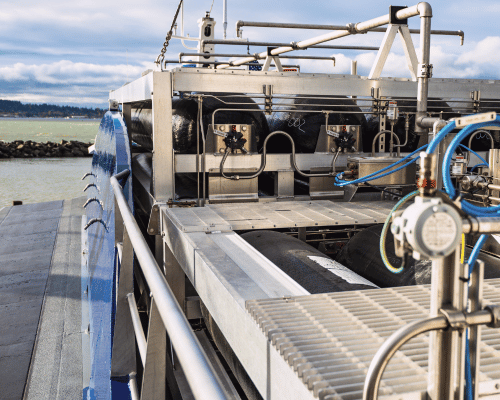
At their core, these are electric vessels. Fuel cells use hydrogen to make electricity, powering electric motors with water vapor as the only byproduct. Onboard battery systems provide extra power while underway. Vessels are designed to fuel once per day - or longer - matching diesel ferry fueling operations.
In service
•
In service •
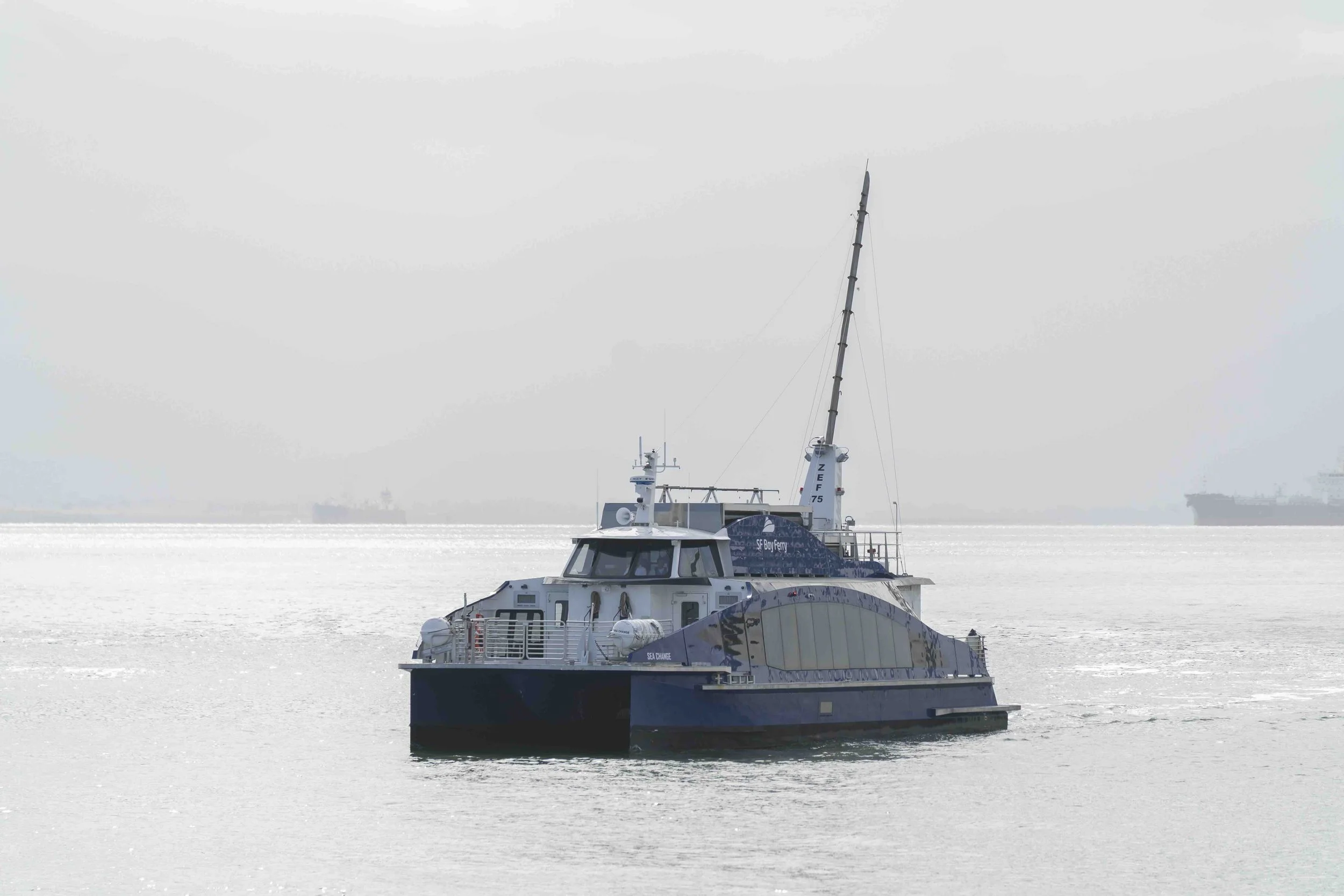
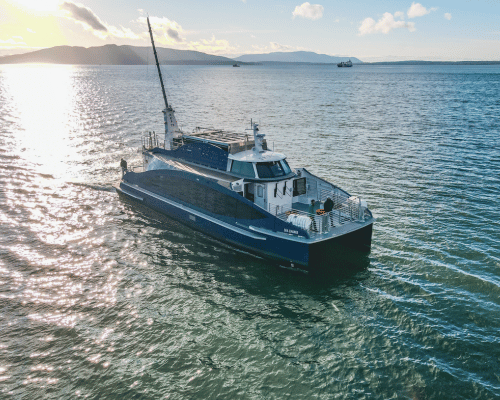
Sea Change is the first hydrogen-powered ferry in the US.
Switch received the first US Coast Guard Certificate of Inspection to be commercially operational, and has been in service since July 2024. It's proof that hydrogen-powered ferry transit isn't a future concept — and every lesson learned is built into what comes next.
Sea Change
-
Passengers: 75
Service speed: 12 knots
Range: 300nm
Propulsion: Hydrogen fuel cell-electric hybrid
Hydrogen storage: Compressed hydrogen gas
In development
•
Shipyard selection
•
In development • Shipyard selection •
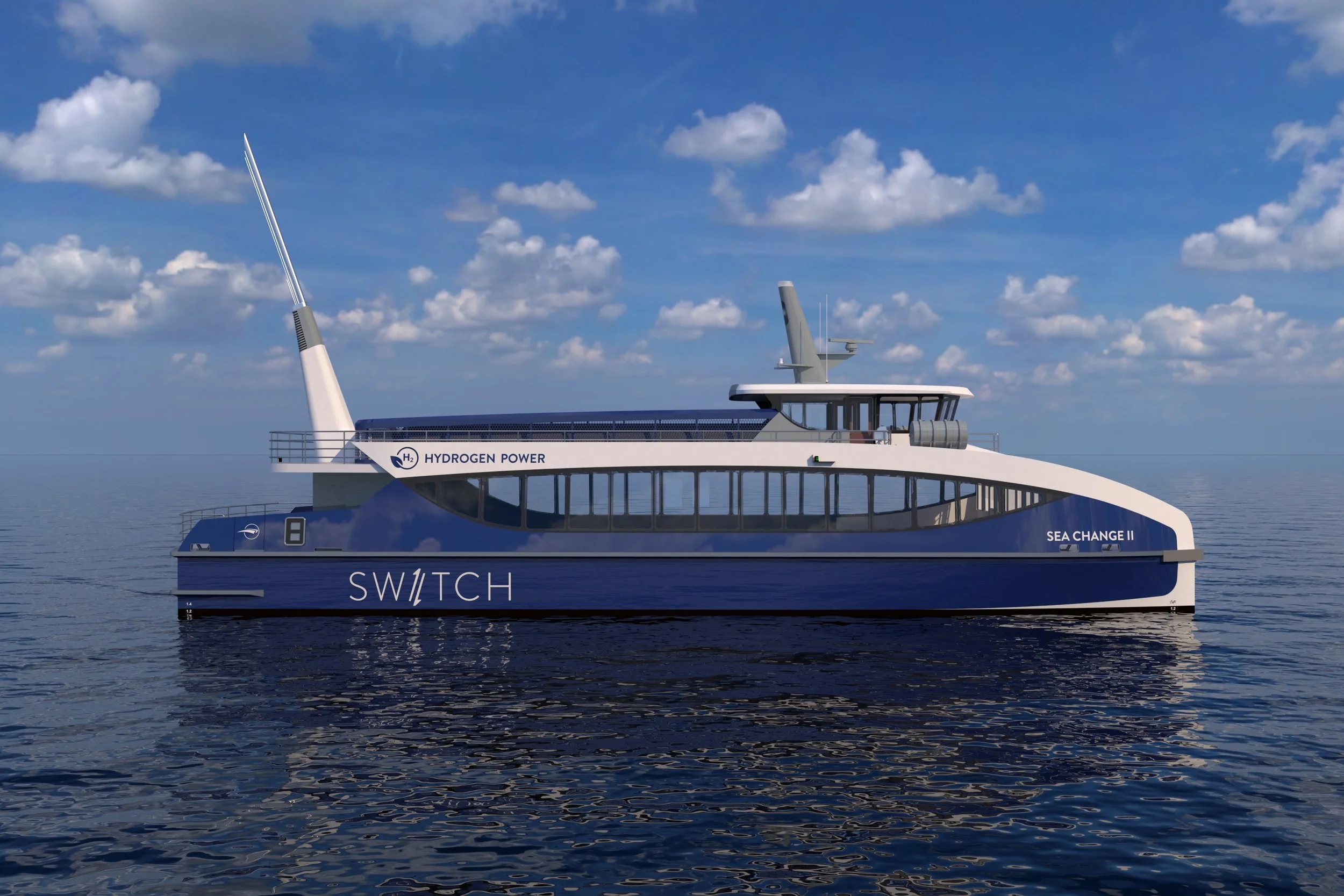
A next-generation 150-passenger ferry, designed to double the capacity and speed of Sea Change — with the same drop-in operational profile.
The SWITCH-150 platform is engineered for high-frequency commuter routes in dense urban markets. Switch Maritime is targeting construction to start in mid 2026, with the first vessel entering service in New York City waters upon completion.
SWITCH-150
-
Passengers: 150
Service speed: 25 knots
Range: 300nm
Propulsion: Hydrogen fuel cell-electric hybrid
Hydrogen storage: Compressed hydrogen gas
Concepting
•
Feasibility
•
Concepting • Feasibility •
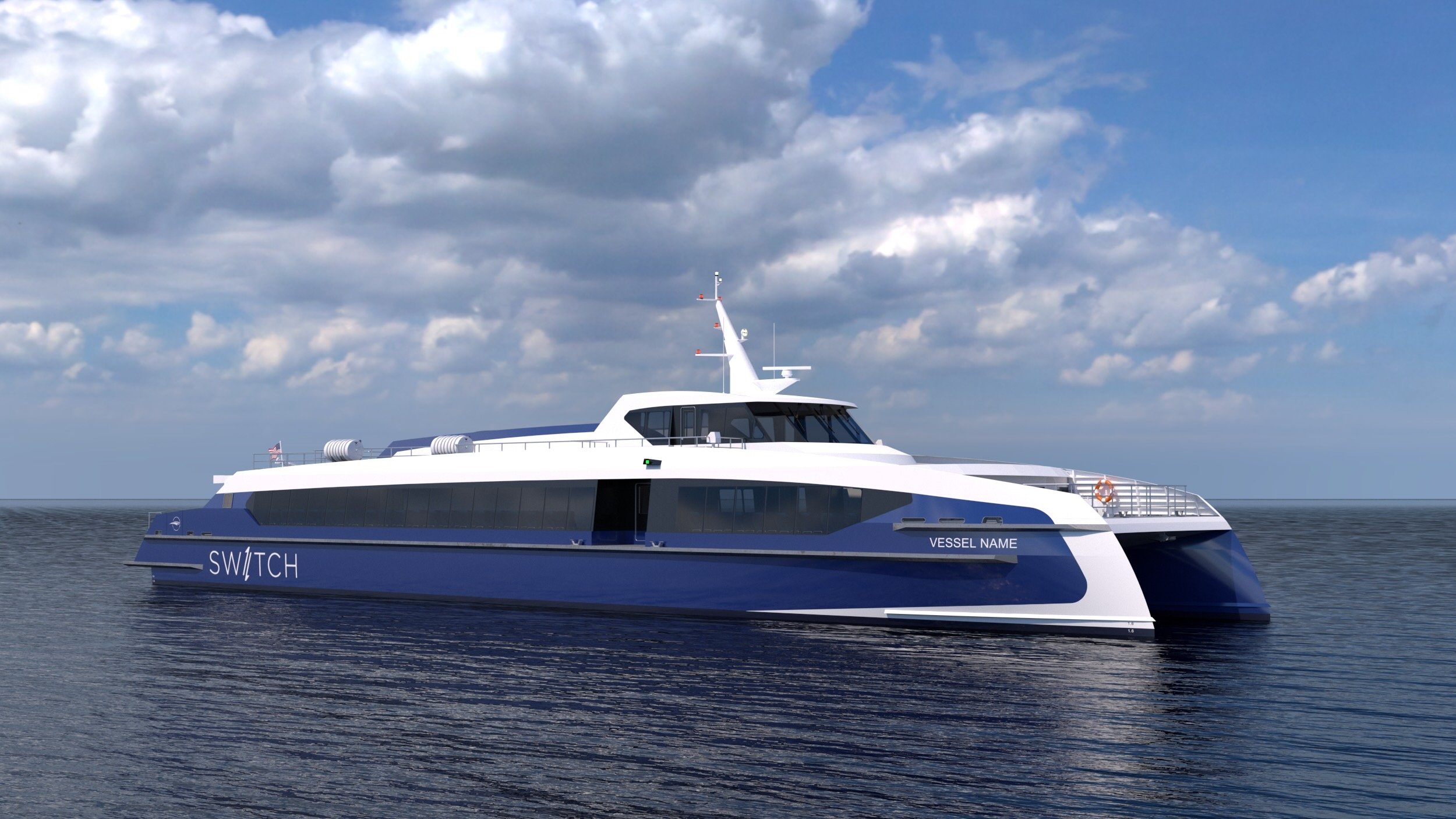
A high-speed, high-capacity platform for long-haul passenger and leisure routes — hydrogen-powered at a scale not previously possible.
The SWITCH-300 is Switch Maritime's most ambitious vessel platform, designed for routes that demand speed, range, and capacity at scale. Currently in technical feasibility and concept development, the SWITCH-300 expands the hydrogen ferry model to 300 passengers at 30 knots — a low emission option for services where no alternative has existed.
We are additionally looking to expand the platform to scale to 450+ passengers.
SWITCH-300
-
Passengers: 300
Service speed: 30 knots
Range: 300nm
Propulsion: Hydrogen fuel cell-electric hybrid
Hydrogen storage: Liquid hydrogen
Construction
•
Ready
•
Construction • Ready •
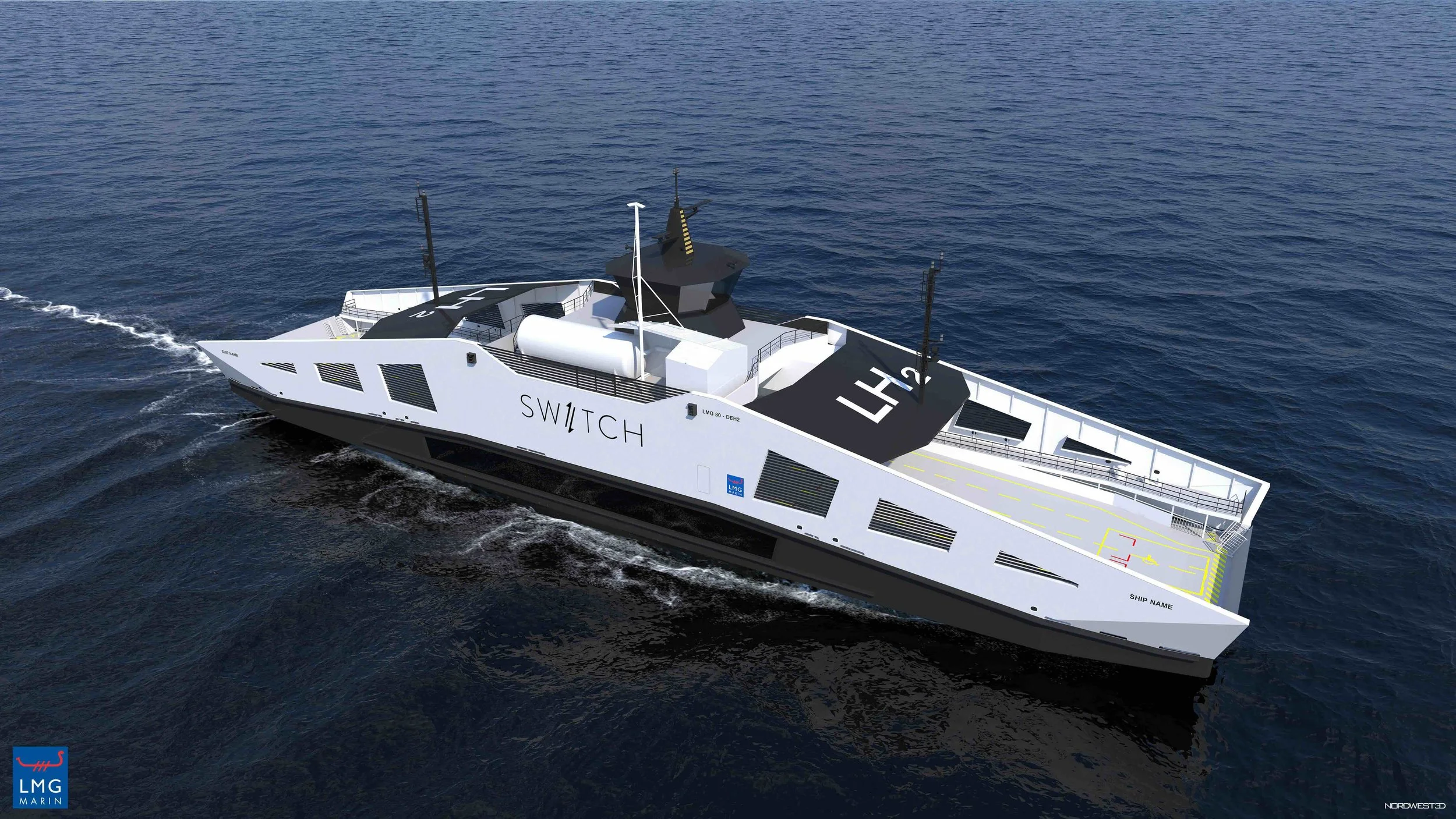
A liquid hydrogen auto/passenger ferry — bringing a proven international platform to US waters for the first time.
The SWITCH-RoPax is Switch Maritime's adaptation of the MF Hydra, a liquid hydrogen ferry that has operated successfully in Norway since 2023. Purpose-built for routes that carry both vehicles and passengers, the SWITCH-RoPax brings an already-proven design to the domestic market — expanding what hydrogen-powered maritime service can look like. Currently in feasibility planning.
SWITCH-RoPax
-
Passengers: 300 pax/80 cars
Service speed: 14 knots
Range: 1000+nm
Propulsion: Hydrogen fuel cell-electric hybrid, with backup diesel generators
Hydrogen storage: Liquid hydrogen
Ferry experience
A better ride for passengers and the places they pass through.
Only water vapor
No exhaust, no particulates. Hydrogen fuel cell ferries emit only water vapor — nothing else leaves the vessel.
Noticeably quieter
Electric propulsion eliminates engine noise and vibration, and the difference is immediately impactful.
Cleaner air and waterways
Fewer emissions means measurably better air quality along coastlines and in the communities ferries serve.
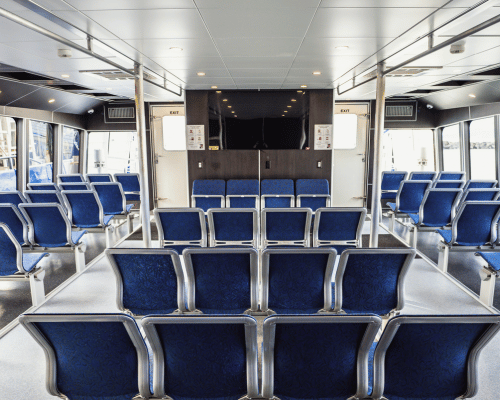
Curated, custom interiors
Choose your interior design based on preferences and to maximize rider comfort.
Common questions
-
Switch Maritime develops, builds, and leases hydrogen fuel cell vessels to ferry operators. We manage the entire process — vessel design and construction, hydrogen fuel supply chain, regulatory approvals, crew training, and ongoing operational support — so operators can modernize their fleets without taking on the complexity themselves.
-
Hydrogen fuel cell vessels use the same electric propulsion as conventional battery-electric ferries, but powered by hydrogen instead of grid charging. Hydrogen is converted to electricity onboard via fuel cells, powering electric motors with water vapor as the only byproduct. The result is diesel-level performance — same speed, same fueling cadence, same crew — with no GHG emissions from the tailpipe.
-
Every Switch project includes a hydrogen fuel supply chain built around your port, your routes, and what's available in your region. We coordinate hydrogen procurement, selecting the most cost-effective and lowest-emission source for your location, and manage transport, permitting, and transfer to vessels.
-
It means the vessel platform is designed and progressing toward shipyard selection and construction. Switch vessels in development have confirmed specifications and are being actively advanced — they are not concept-stage projects. Operators can engage with Switch now to align on routes, timelines, and lease terms ahead of delivery.
-
Hydrogen fuel cell ferries are designed to slot directly into existing diesel-based ferry operations — same schedule, same fleet size, same crew to manage. Operationally, they perform on par with diesel in speed and fueling cadence. The key differences: no exhaust, dramatically lower emissions, quieter ride, and no exposure to diesel fuel price volatility. An independent analysis found hydrogen cost-competitive and reaching parity with diesel by year 15, with the lowest total emissions of any propulsion option.
-
Hydrogen ferries perform best on defined, repeatable routes — commuter corridors, island crossings, and harbor services where vessel range and fueling infrastructure can be planned around a consistent schedule.
Switch's vessel platforms are each designed with specific route profiles in mind, so the right fit depends on your operation.
Sea Change is suited for short-to-medium range commuter routes, harbor and bay services, and high-frequency urban ferry networks — ideal for operators running regular, predictable schedules in coastal or bay environments.
SWITCH-150 is built for high-frequency urban commuter routes and longer inter-borough or harbor crossings — designed to handle the demands of dense waterway networks with higher passenger capacity.
SWITCH-300 extends hydrogen's reach to long-haul, high-speed commuter routes, regional passenger services, and leisure and tourism crossings — bringing low emission propulsion to routes that previously had no viable alternative.
SWITCH-RoPax is designed for vehicle and passenger ferry routes, including island and coastal crossings and longer-range state and regional DOT ferry services — bringing a proven international platform to US waters for the first time.
-
Switch is the only US company to have successfully developed, permitted, and operationalized a hydrogen-powered maritime vessel — earning the first-ever USCG Certificate of Inspection for a hydrogen fuel cell electric ferry. Every vessel is designed to meet or exceed the same safety standards as conventional ferries, and Switch manages all regulatory approvals and compliance as part of its end-to-end service.
Interested in a vessel for your fleet?
Tell us about your routes and operation. We'll walk you through what a transition could look like.